
The fit comparison
Compare the published fit limits
Use these published dimensions to shortlist a fit, then measure the space you have and check the exact version before ordering.
Scroll across the table for every fit check.
| Model | Seat height | Seat depth | Armrest fit |
|---|---|---|---|
| Steelcase Series 1, Onyx A lower seat with a depth slider | 41–52 cm, maker’s UK method | 42–48 cm usable, adjustable | Adjustable armrests. Check height under your desk. |
| SIHOO M59AS, black A fixed pan with folding arms | 46.5–56.5 cm | 43.5 cm published seat depth, fixed | Flip-up arms for parking. Check the chair in its working position too. |
Measure the chair you can sit back in
Height alone rarely answers whether a chair fits a shorter person. You need to be able to sit against the backrest with feet supported, leave space behind the knees and reach the work surface without lifting your shoulders. Two people of the same height may need different settings because their lower legs and thighs differ.
Wear your usual shoes. Sit in a chair you already use and adjust the seat or use a stable trial foot support. With both feet supported, record the floor-to-seat height where you can sit back comfortably. Then measure from your backrest contact point to the front of the cushion and check the gap behind your knees. Use the seat-depth measurement guide for the steps.
A maker’s measured height may differ from a reading you take with the seat occupied. Cushion compression, tilt and the measuring point all matter. If your reference height is near the lower end of a listing, try the chair or confirm the exact cylinder and castor configuration with the maker.
Steelcase Series 1 for a lower start and adjustable depth
Steelcase’s UK figures for the Series 1 give 41–52 cm seat height and 42–48 cm usable depth. Its depth slider lets you start short and lengthen the support until you find a comfortable position. The Onyx listing is the chair with a black mesh back and upholstered seat.
A lower seat with a depth slider
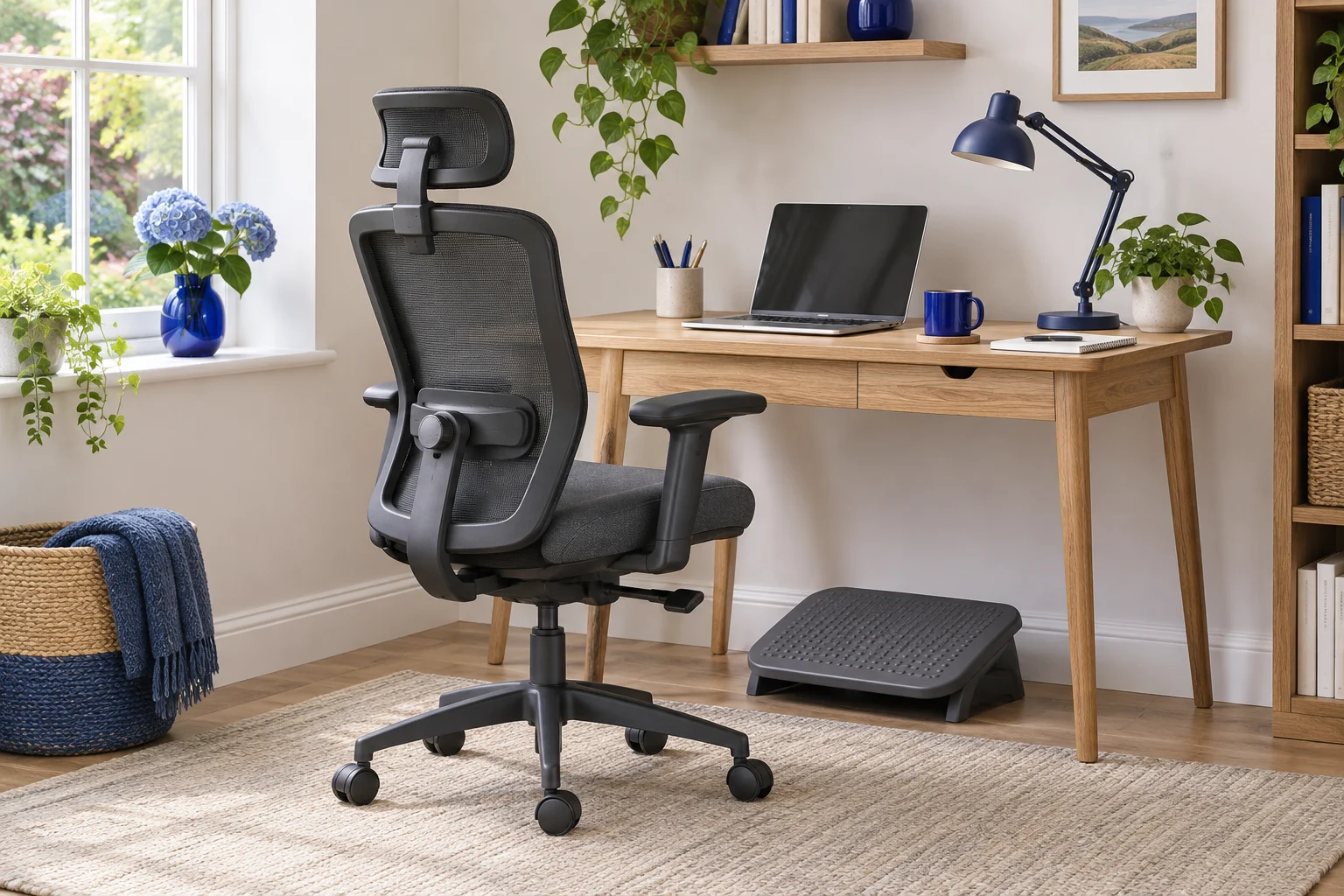
Steelcase Series 1, Onyx
The UK Series 1 specifications list a 41 cm starting seat height and a usable depth range of 42–48 cm. A slider lets you trial the shorter setting.
Steelcase uses a standardised measuring method. Try the seat with your own footwear if you are near the minimum, and check armrest and castor fit at your desk.
- 41–52 cm seat height
- 42–48 cm usable depth
- Depth slider
Try the lowest height with the slider in its shortest position. If the front edge still crowds your knees, the slider’s remaining travel only goes in the longer direction. If the chair fits your legs, use the armrest controls to see how close you can get to the keyboard with your shoulders relaxed. Steelcase publishes a standardised measurement, so use a seated trial when a difference of a centimetre would matter.
SIHOO M59AS for a higher fit with folding arms
The SIHOO M59AS is an alternative for someone whose measured seat target already falls within 46.5–56.5 cm or whose desk calls for a higher, supported sitting position. Its published seat depth is 43.5 cm. The armrests can flip up to help park the chair.
A fixed pan with folding arms
SIHOO M59AS, black
The black M59AS has a published 43.5 cm seat depth and arms that flip up for parking under a desk.
The seat starts at 46.5 cm. Check supported feet and knee clearance at that height. A trial is especially useful if your target depth is close to 43.5 cm.
- 46.5–56.5 cm seat height
- 43.5 cm seat depth
- Flip-up arms
Keep the fit checks separate. If your target height is 42 cm with feet on the floor, the M59AS starts 4.5 cm above that figure. A footrest may support a higher setup that suits your keyboard. To use the chair’s backrest, you still need its fixed pan to leave room behind your knees. Try the chair at the table you use, with arms both down for work and up for parking.
Check the desk before committing to the chair
Measure from the floor to the lowest obstruction beneath the top. Take the measurement at the front rail and where your thighs sit when you roll in. Next measure the height of the arm pads while seated in your chosen position. Compare those figures and check whether the outside of the arms or castors hits the desk legs.
If the desk is too high for comfortable typing, raising the chair can help when there is adequate thigh clearance and space for foot support. Measure the height that puts your hands at the keyboard, then see where your feet land. Our desk height guide and footrest comparison explain how to fit those surfaces together.
Try a short normal task in the final position. Alternate between keyboard and mouse and notice whether you move forward away from the backrest. If you do, check the seat depth, arm clearance and reach to the keyboard again. When buying online, confirm the dimensions for the exact model, the assembly requirements and how returns work after a trial.
Common questions
What is the most useful chair dimension for a shorter person?
Check minimum seat height and shortest usable seat depth together. Then check armrest clearance at your actual desk height.
What does the Steelcase Series 1’s seat depth range mean?
The UK maker lists 42–48 cm of usable depth. Start at the shorter end and check that you can sit back without the seat edge crowding the knees.
Is the SIHOO M59AS suitable for every shorter user?
Compare its 46.5 cm minimum height and 43.5 cm published fixed depth with your measurements. Trial the fit if either dimension is near your limit.
Can a footrest help at a fixed desk?
A stable footrest supports your feet if you raise the chair to reach the keys. Check the pan depth and space beneath the desk at that setting too.
Do flip-up arms guarantee a chair fits under the desk?
Check the chair with the arms raised for parking, and with the arms at your working setting. Measure the castors, seat and any low rails in both positions.
Sources and selection
Specifications and Amazon UK variants checked in November 2026. The comparisons use published dimensions and fitting guidance.