
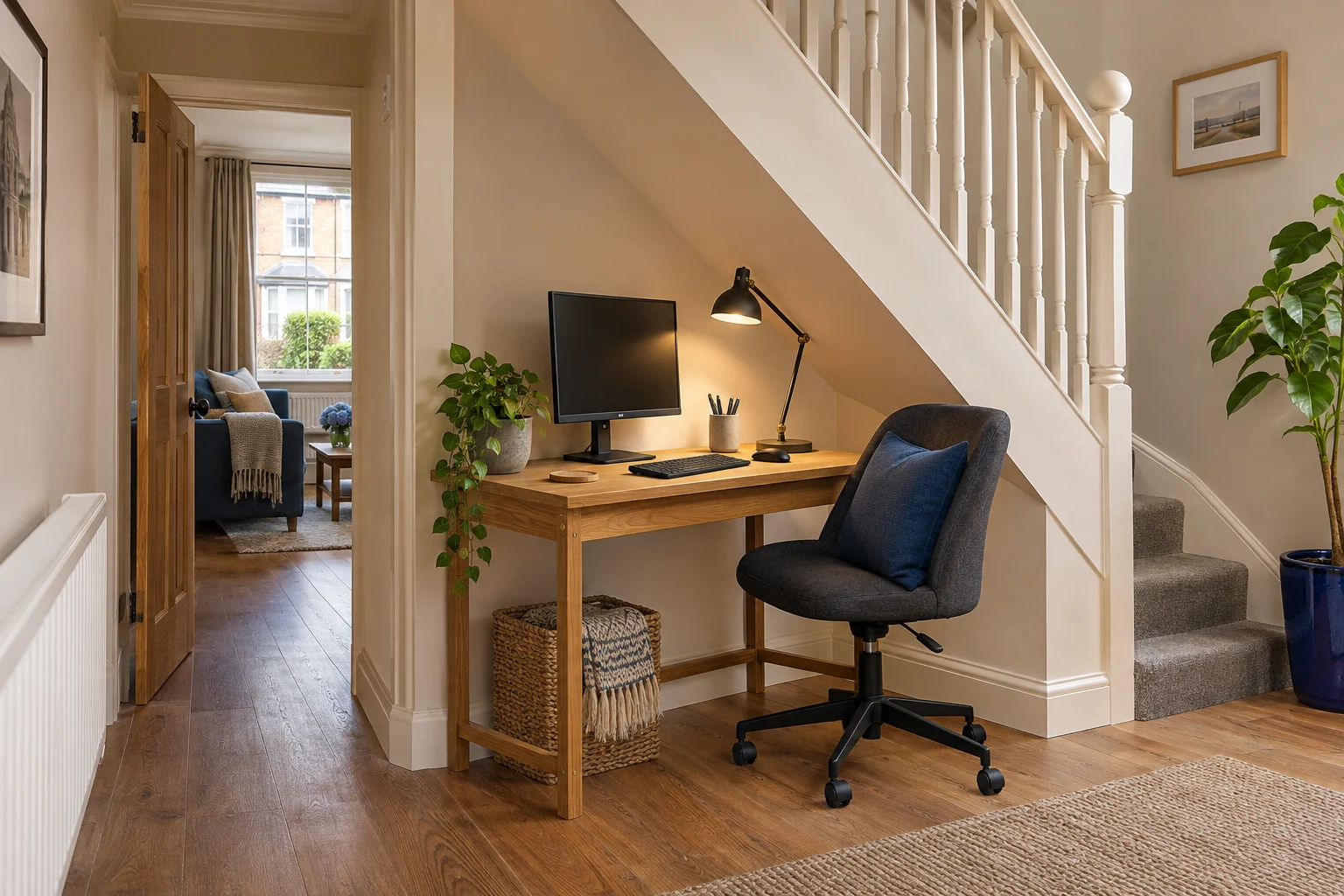
Measure a side view of the slope
Draw the stair slope and mark the proposed front edge of the desk on the floor. Measure floor-to-underside height at the seated head position, at the point where you rise and farther back along the chair’s exit. Include projecting trim and the lowest structural parts. Try sitting down, turning and standing without a desk in place first.
Keep the walking route past the stairs clear. The space beneath a slope may accept the back of a desk while offering little room for a person to move. Place the working seat and standing-up point in the taller area. Use a side-view sketch for the screen too, including any stand, arm and top corners.
Trace a freestanding 100 × 50 cm desk
The VASAGLE LWD40X measures 100 × 50 × 75 cm. Tape its footprint in the opening and mark the legs and rear bracing. Check whether the desk can be assembled and moved into position. Its overall depth gives a starting point for the screen and input layout, but you still need the display base and plugs on that surface.
For a compact open front
VASAGLE LWD40X writing desk
A 100 × 50 cm surface and open front suit a compact laptop or single-screen arrangement.
Check the rear bracing, the 75 cm working height and the usable depth with cables in place.
- 100 × 50 cm top
- 75 cm worktop
- Open front with rear bracing
Set the chair at your working height and check the lowest rail along the knee path. Pull the chair back far enough to stand, then see whether the seat or castors narrow the hallway. If the fixed desk cannot leave room for both actions, compare a different position in the home.
Fit the laptop screen without crowding the keys
A foldable stand such as the silver UGREEN 40289 can lift a laptop screen while a separate keyboard and mouse stay on the desk. Check the open stand, laptop base and lid through all settings you plan to use. A raised screen can reach the slope earlier than you expect.
A stand to pack away
UGREEN 40289 folding stand
The silver 40289 folds into a narrow bundle and has five raised positions. It suits a desk or table you clear between sessions.
Trial the laptop’s support points, front lip, vents and cable exits at the chosen setting. Diagonal screen size alone leaves those details unresolved.
- Five height settings
- About 4.7–13.8 cm listed lift
- 27 × 5.5 × 2.7 cm folded
Set the laptop at a readable angle and mark its highest corner in the side view. Keep its ventilation openings and ports clear. Check that there is still space to type with relaxed shoulders and to use the mouse without reaching towards the low corner.
Check lighting, cables and everyday access
Sit in the position during the hours you expect to work. Look for reflections from a nearby doorway or window. Place a task light so it lights the keyboard or paper without forcing the screen deeper under the slope. Leave room to reach its switch.
Plan a cable route along the furniture outside the walking path. Keep plugs accessible and avoid leads crossing the base of the stairs. Try a normal work session and then put the chair away. Measure the route again with the room in that parked state, including any bags and storage used at the desk.
Common questions
How much headroom does an under-stairs desk need?
Measure your seated position, standing-up point and exit path. The stair slope and your movement determine the usable space.
Should the chair sit at the low end of the slope?
Place the chair where you can sit, rise and turn with clear headroom, usually towards the taller part.
Is a 50 cm-deep desk enough?
Lay out the real screen base, laptop, keyboard and plugs. Check viewing position and hand space on the usable surface.
Can I use a standing desk under stairs?
Check the complete raised desk, screen and your headroom through all intended positions before choosing it.
Where should the cables run?
Keep them on an accessible route along the furniture and clear of the stair approach, chair and feet.
Sources and selection
Sources and Amazon UK listings checked in November 2026. Fit examples use published specifications and measurements to take in your own room.